ISO 9001, ISO 14001, ISO 45001 und IECQ QC080000
 Fertigung seit 2014
 KOSTENLOSE Muster zur Sicherstellung der Produktzufriedenheit
 Schnelle Abwicklung: Massenproduktion in 15 - 20 Tagen abgeschlossen

Many China factories set a minimum order quantity, or MOQ, of 10,000 pieces or more for a custom pogo pin. For designs that skip new tooling and special plating, 3,000 units is a realistic MOQ for pogo pins in China. The minimum depends on setup, plating, and assembly costs. A factory that runs all three in-house can spread them across a smaller run.
Planning a pilot build? You may be worried that a China factory will ignore a small order or price it out of reach. A factory’s minimum isn’t arbitrary, though. It reflects fixed costs you can ask about. Once you know what drives the MOQ, you can compare quotes from any pogo pin manufacturer in China on equal terms.
China Pogo Pin MOQ: What Should You Expect?
The same factory can quote very different minimums for the same pin. The number depends on what you’re ordering: samples, a pilot run, or a production order. Each stage serves a different purpose, so each has its own quantity and pricing rules.
Many buyers only ask for the production number and get surprised later on. Asking about all three stages up front shows you whether a factory can take your project from first prototype to steady supply.
Samples and pilot runs fall below the production minimum, and many China factories treat them as separate services. Here’s how the three stages usually compare, next to how we handle each one.
| Order stage | Typical China factory quote | What it’s for | Our approach |
|---|---|---|---|
| Kostenlose Muster | Commonly a few pieces up to a few hundred, often free for standard designs | Checking fit, function, and contact in your own device | Free samples for qualification testing |
| Pilot run | Often 100–1,000 pieces, usually at a higher unit price | Your first product build and early field testing | Small batches of 100–1,000 pieces on the same line and quality system as production |
| Production order | Varies; ask for a tiered quote | Ongoing supply at a stable unit price | 3,000 units for designs without new tooling or special plating |
Treat the production row as a starting point rather than a fixed rule. The tier section further down shows how tooling and plating shift the production minimum.
What Does MOQ Mean for a Custom Pogo Pin Order?
A minimum order quantity is the smallest number of pieces a factory will make for a single order. Factories set it to recover fixed costs, such as machine setup, that stay the same at any order size. For a custom pin, the definition matters less than what the pogo pin minimum order quantity does to your plans.
Why MOQ is the first hurdle for a small run
For a small team or project run, MOQ often decides the project before anyone discusses spring force or plating. If the minimum is far above what your pilot build needs, you’re paying for pins that sit on a shelf. That’s why it pays to ask about MOQ in your very first email.
How MOQ connects to unit price breaks
Unit price usually falls as quantity rises, because the same setup cost is spread across more pieces. That doesn’t mean you should order more than you need. But if you’ll need pins for a second build later in the year, one larger order can cost less than two minimum orders. You pay for setup once instead of twice.
Ask for unit prices at a few quantity breaks, such as 3,000, 5,000, and 10,000 pieces. Then compare each total against what you’ll actually use.
Why Do Many China Pogo Pin Factories Quote 10,000+?
A 10,000-piece quote usually isn’t a brush-off. It’s a factory protecting itself against fixed costs that land on every run, however small. Think of a print shop that charges for plate setup whether you print 100 flyers or 10,000.
Three of those costs come from inside the factory, and a fourth sometimes comes from outside it.
Lathe setup and tooling
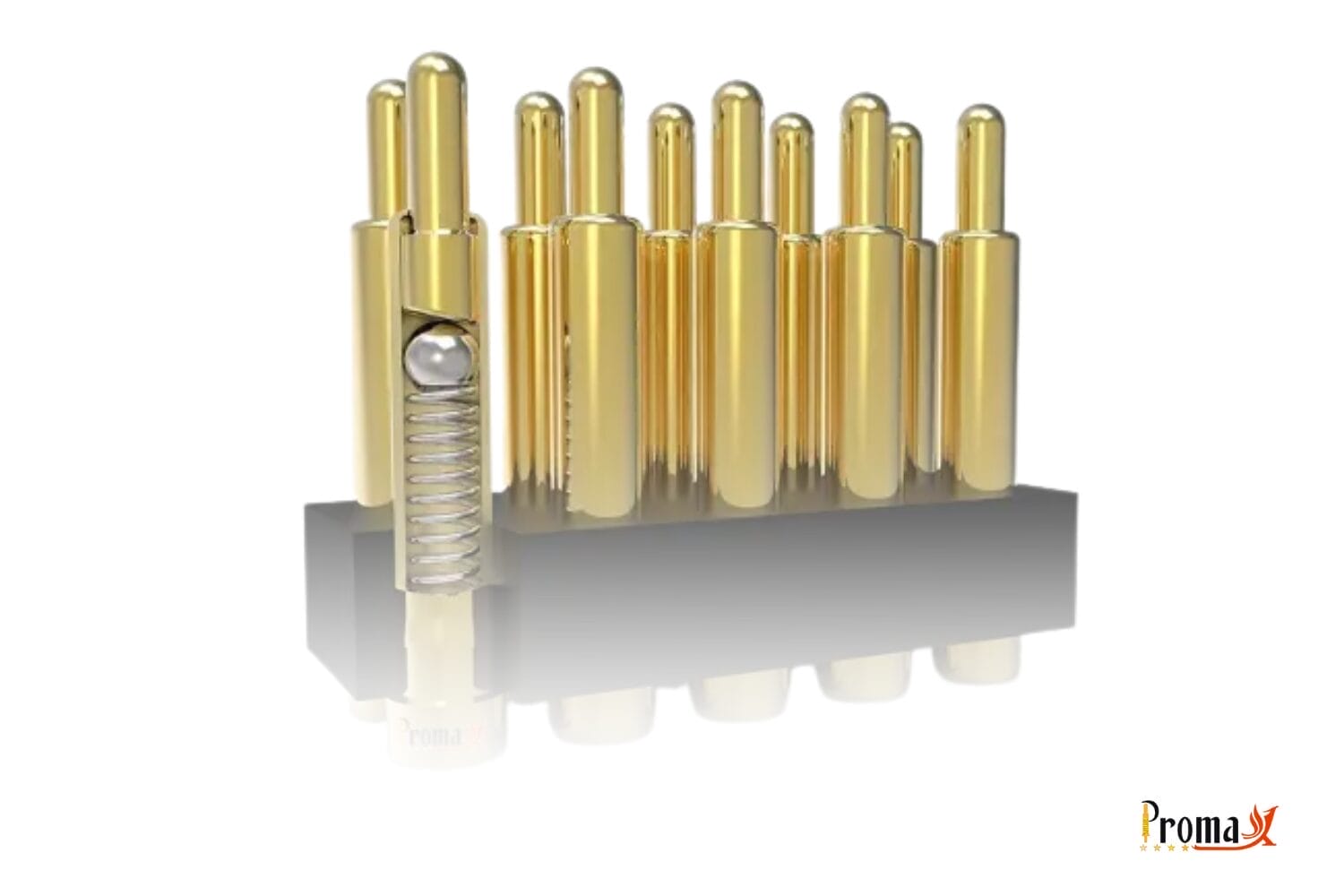
Pogo pin plungers and barrels are usually cut on computer-controlled Swiss-type lathes. These machines hold small, slender parts steady while they’re machined. Setting one up for a new part can take several hours. That time costs the same whether the run is short or long, which is why Swiss-type lathe setup economics favor long runs.
A brand-new design may also carry a Non-Recurring Engineering (NRE) charge. NRE is a one-time fee for the engineering and tooling a new design needs.
Plating lot economics
Small parts like pogo pins are usually barrel plated. Many pieces tumble through the plating bath together as one lot. A plating line has a minimum practical load, so a tiny lot costs nearly as much to run as a full one.
Contact Gold plating is usually specified to ASTM B488, the specification for electrodeposited Gold coatings used in engineering. That makes each lot a controlled process with its own checks, not a cosmetic dip.
Assembly and inspection setup
Assembly and inspection carry their own setup for every new part number. The line needs new or adjusted fixtures, dialed-in spring loading, and compression tests set for the new stroke and force. None of that work gets cheaper on a small order.
Trading companies that add their own minimum
Some quotes don’t come from a factory at all. A trading company sits between you and the production line. It often adds its own minimum and margin on top of the factory’s. You end up paying for two layers of overhead without seeing either one.
How is a 3,000-Unit MOQ Possible?
The fixed costs don’t disappear on a smaller run. What changes is who carries them and how well they’re spread. Bei Promax Pogo Pin, we run every production step in our own factory. There’s no middleman minimum stacked on top and no handoff between suppliers.
One factory from bar stock to final inspection
A pin starts as bar stock on our lathes and passes a quality check before plating. After a second check, it moves through assembly, full compression testing, and spring force and resistance testing. Appearance inspection follows before packing.
Because one team owns that chain, problems get fixed at the source. If the plating check finds a burr or a dimension drifting, the lathe team adjusts the same day. When turning and plating sit with separate suppliers, the same fault can run through a whole lot before anyone traces it back. That wasted lot is exactly the kind of cost that pushes minimums up.
Precision works the same way. A finished pin’s consistency depends first on its design, material, and size. Within those limits, consistency comes from turning, plating, and inspection working as one controlled system, not from any single machine.
That system runs under ISO 9001, ISO 14001, ISO 45001, and IECQ QC080000 certification, so you can check it yourself.
Shared part families and existing tooling
Many custom requests start closer to an existing design than buyers expect. If your pin can use a proven plunger, barrel, or spring family, changing its length or plating usually avoids new tooling. That’s often the difference between a standard-tier minimum and a custom-tooled one.
Yield keeps small runs economical
Scrap is a hidden reason some factories raise their minimum. If a run loses a share of its parts to defects, the factory pads the order so enough good pins ship. We hold mass production yield above 99% on established designs, though yield always depends on part design and complexity. Less scrap means your order doesn’t need extra pieces to cover losses.
How Do Plating and Tooling Change the Pogo Pin MOQ?
Two things move the minimum more than anything else: how much new tooling your pin needs, and how specialized the plating is. A pin that reuses existing tooling with standard Gold plating lands at the low end. A fully new design with heavy or selective Gold lands at the top.
Here’s how the four common tiers compare. Your design may fall between two rows, so treat each tier as a guide for the first conversation.
| Stufe | Tooling needed | Beschichtung | Expected MOQ | Why it moves |
|---|---|---|---|---|
| Standard catalog pin | None; existing design | Standard Gold | 1,000 units | Runs alongside existing production with routine setup |
| Standard pin with custom length or plating | Minor program change on a proven family | Standard Gold or Nickel | 3,000 units | Reuses tooling, so setup stays small |
| Custom-tooled pin, standard plating | New plunger or barrel profile, often with NRE | Standard Gold | 100 – 1,000 units for a pilot batch | Pilot runs possible; NRE covers new tooling |
| Custom-tooled pin, heavy or selective Gold | New tooling plus plating masking or fixtures | Heavy or selective Gold, for example up to 80 µin where contact design and mating cycles call for it | 5,000–10,000 units, depending on plating spec | Needs its own plating lot on top of new tooling |
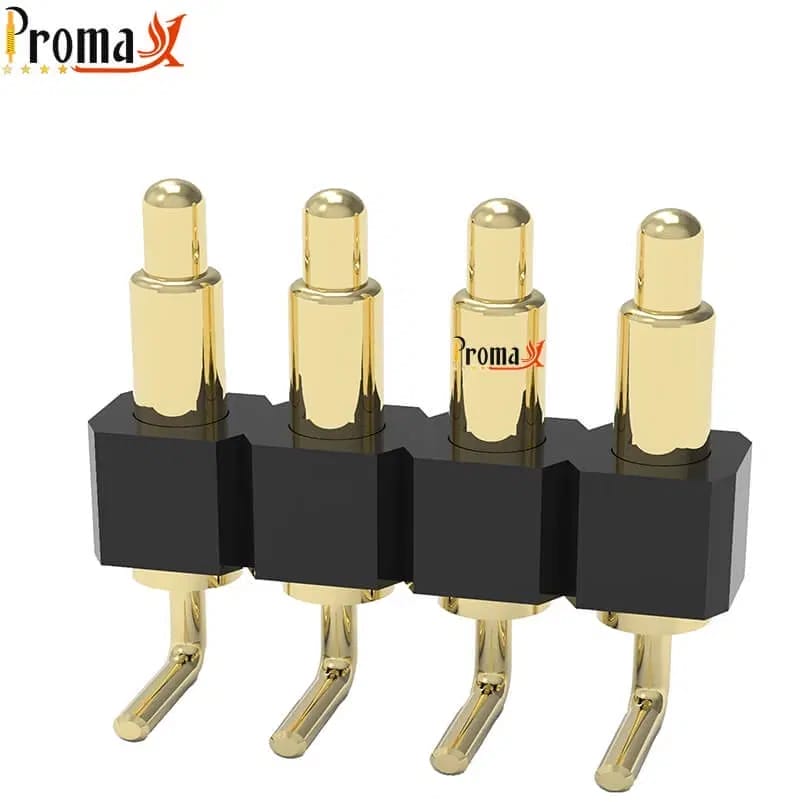
Tooling sets the floor, and plating can push it up from there. A heavier Gold layer can help a contact survive more mating cycles, but it usually needs its own plating lot. You can compare base designs across our standard and custom pogo pins before deciding which tier fits.
If you’re unsure which tier you’re in, start from what the pin has to do, not the finish you’d like. Many designs specify heavier plating than their mating cycles need. Dropping to a standard finish can move a pin down a full tier.
Brauchen Sie schnell Pogo-Pins? Sprich mit einem Ingenieur
Get a custom quote, spec matching, and manufacturing guidance without slowing down your project.
- ISO 9001 / 14001 / 45001+ IECQ QC080000
- Über 15 Jahre Erfahrung
- Kostenlose Muster
- Serienfertigung in 15–20 Tagen
When Will You Still Need a Higher MOQ?
A 3,000-piece minimum is a baseline, not a promise for every design. Some pins need work that no factory can spread thinly. It’s better to know that before you ask for a quote. These three situations most often push the minimum order for custom pogo pins higher.
New tooling or non-standard geometry
A fully new plunger or barrel profile needs new tooling, new lathe programs, and usually an NRE charge. Very small diameters and unusual stroke lengths add setup time. The line has to prove the part before it runs steadily.
Tight tolerances follow the same logic. What any factory can hold depends on part design, material, size, and its own process capability. Very tight limits can slow a run and raise the minimum.
Special plating or materials
Selective plating, heavy Gold, and non-standard base materials each need a dedicated plating lot or a separate material buy. The factory has to use that lot or material up, so the order must be big enough to justify it. How far the minimum moves depends on the material and the plating spec.
Molded housings and multi-pin connectors
A single pin and an assembled connector aren’t the same order. A multi-pin connector with an injection-molded housing brings mold cost and its own minimum, which is often higher than the pin’s. Whether that raises your order depends on the housing design, material, and size.
How Do Samples and Pilot Runs Fit Below the MOQ?
Most projects move through three steps: free samples to check fit and function, a pilot run for the first build, then the production minimum. Each step answers a different question, so each carries different quantities and pricing. Promax Pogo Pin offers free samples at the first step, so you can qualify a pin before committing to volume.
1. Free samples to check fit and function
Samples are for qualification, not small production. You use them to confirm the pin seats on your board, compresses cleanly, and holds stable contact through your own testing. We ship samples within two weeks of a confirmed sample order, which keeps a design review on schedule.
2. A pilot run for the first product build
A pilot run sits between samples and production. It covers your first build, early field units, or a certification batch. That makes it bigger than a sample order but smaller than the minimum.
Pilot pricing usually carries a premium per piece because setup is spread across fewer pins. That premium is normal. It’s also worth paying, because a pilot run catches design issues and needed changes before you commit to volume.
3. Moving up to the production minimum
Most buyers move to production once the pilot build passes testing and the design is frozen. Staying with the same factory and quality system across all three stages means you don’t requalify a new supplier halfway through. The pin you tested is the pin you get in volume.
How Do You Request a Quote Below Standard MOQ Tiers?
A low MOQ pogo pin manufacturer can only quote low when it knows exactly what you need. Clear inputs let the factory spot shared tooling and skip padding, which is what brings the minimum down. These five steps take the guesswork out for the factory, which works in your favor for MOQ pricing.
1. Send a drawing or STEP file with critical dimensions marked
A drawing or STEP file lets engineers check your pin against existing designs straight away. Mark the dimensions that matter, so nobody tightens features that don’t need it. Our engineers respond with design feedback within 1–3 days. We’ll also sign a non-disclosure agreement before you share files.
2. Say which features are fixed and which can flex
Tell the factory which specs are locked, such as fit, current, and travel, and which could move. A diameter with a little freedom might match an existing barrel and avoid new tooling. That flexibility often decides which tier your pin falls into.
3. Ask whether an existing part family fits
Ask directly whether your pin can start from a proven design. A factory with a deep library of custom parts often has something close, and building from it saves setup. Many buyers never think to ask this simple question.
4. Give annual volume, not just the first order
A first order looks different when the factory knows you’ll need far more over a year. Sharing your forecast lets the factory plan material and plating lots across several runs. That planning can bring the first run’s minimum down.
5. Ask for a tiered quote and the NRE separately
Request unit prices at two or three quantities, with any NRE listed as its own line. Splitting the two shows what you’re paying for setup and what you’re paying per piece. It also makes quotes from different factories much easier to compare.
How Should You Compare MOQ Quotes?
Before you compare headline numbers, ask any factory what actually drives its minimum. Setup, plating, assembly, and any middleman layer explain most of the gap between quotes. A low MOQ can hide a trading company’s markup or a separate tooling fee, while a higher one may include tooling you’d otherwise pay for. Compare the total cost at the quantity you’ll actually use, and check whether the same factory can take you from samples to production.
Promax Pogo Pin turns, plates, assembles, and tests every pin in our own Dongguan factory, so your pilot and production runs share one line and one quality system. We’ve also delivered more than 8,000 custom designs, so there’s a good chance your pin can start from a proven part family. If you’re planning a pilot or a first production run, senden Sie uns Ihre Zeichnung. We’ll review it, suggest the closest tier, and arrange free samples so you can test before you commit.
China Pogo Pin MOQ Reality FAQs
Does the pogo pin MOQ apply per part number or per order?
The MOQ applies per part number, so each distinct pin design needs to reach its own minimum. Pins that share a base design and plating can sometimes share a run, which helps when you need the same pin in two lengths.
Can one MOQ order be split across two plating finishes?
An order split across two plating finishes usually counts as two plating lots, because each finish runs as its own batch. Turning can often run as one job, so the split mainly affects plating cost and timing.
Is the NRE charge credited back at higher volumes?
An NRE charge is often credited back or waived once cumulative orders pass an agreed volume, though the threshold varies by design. Ask for the credit terms in writing alongside your tiered quote.
Is the minimum lower for a repeat order of the same pin?
A repeat order of the same pin usually carries a lower minimum, typically from 1,000 units, because the tooling, programs, and inspection setup are already proven. Keeping the design unchanged between orders protects that advantage.
What payment terms apply to a first MOQ order?
A first MOQ order runs on a tiered quote, with an advance payment before production and the balance before shipment. The advance share depends on the order value. We accept USD or Euros through our corporate Bank of China account.
Zurück nach oben China Pogo Pin MOQ Reality: Why 3,000 Units Beats the 10,000+ Quotes
Brauchen Sie schnell Pogo-Pins? Sprich mit einem Ingenieur
Get a custom quote, spec matching, and manufacturing guidance without slowing down your project.
- ISO 9001 / 14001 / 45001+ IECQ QC080000
- Über 15 Jahre Erfahrung
- Kostenlose Muster
- Serienfertigung in 15–20 Tagen