ISO 9001, ISO 14001, ISO 45001 und IECQ QC080000
 Fertigung seit 2014
 KOSTENLOSE Muster zur Sicherstellung der Produktzufriedenheit
 Schnelle Abwicklung: Massenproduktion in 15 - 20 Tagen abgeschlossen

Pick a pogo pin when a connection mates thousands of times, as in a test fixture or charging dock. Pick a Zero Insertion Force (ZIF) connector when a flat flex cable is mated only a few times and board height is tight.
In the pogo pin vs. ZIF connector choice, mating frequency settles most cases before current or cost. A ZIF connector clamps its cable with a latch that someone has to close every time. A pogo pin carries a spring in each contact, so there’s no latch to wear and no step to forget. That’s why high-cycle setups tend to use Federkontakte, while ZIF keeps its place inside the product.
Pogo Pin vs. ZIF Connector: What’s the Core Difference?
The pogo pin vs. ZIF connector question comes down to where contact force comes from. A pogo pin builds that force into every contact with a spring. A zero insertion force connector adds it afterward, through a latch that someone closes.
The question rarely starts from a blank page. More often, an engineer inherits a ZIF on a reference design and has to decide whether it’ll survive a test fixture or a docking port.
How does a pogo pin make contact?
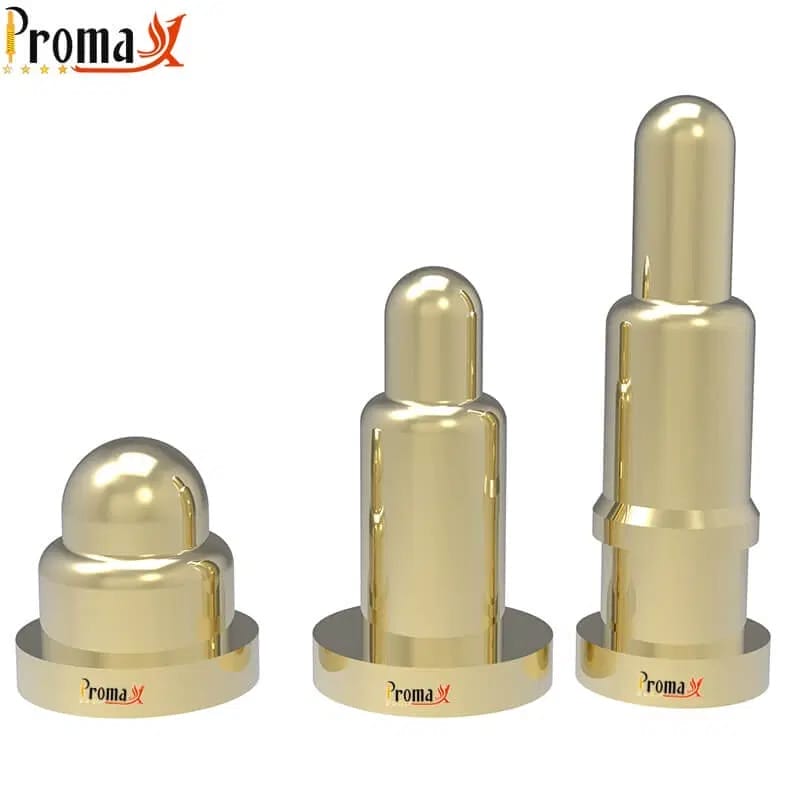
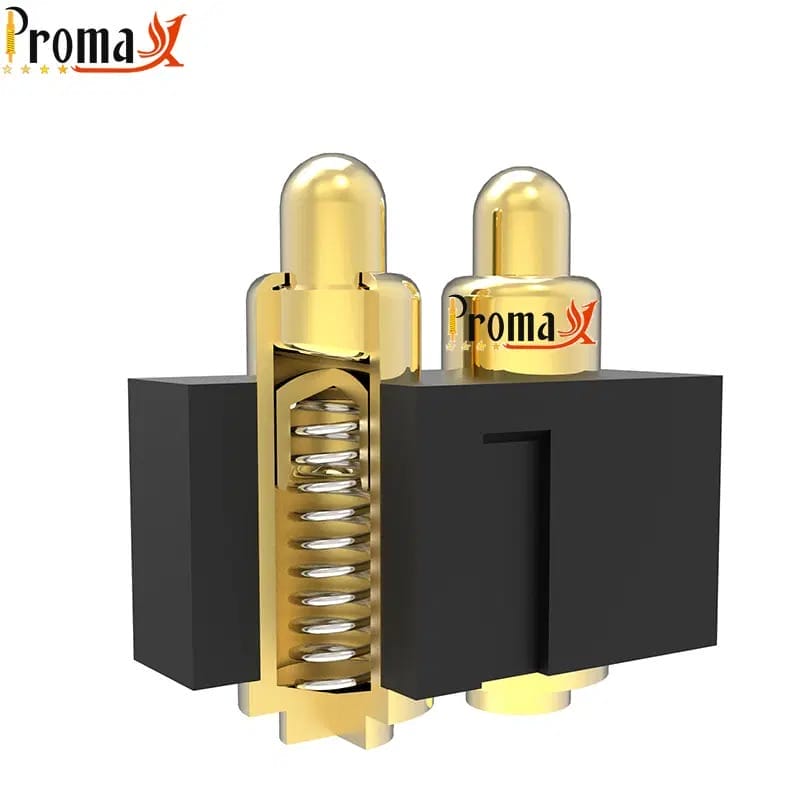
A pogo pin has three working parts: a plunger, a barrel, and a coiled spring. The spring pushes the plunger out against a flat pad, so contact force is already there the moment the parts meet. There’s no mating half to latch. The target is usually just a gold-plated pad, which also lets a pogo pin join two boards directly without a cable in between.
How does a ZIF connector make contact?
With ZIF, the cable or chip slides in with nothing pressing on it. An actuator or lever then closes and clamps the contacts. The insertion force hasn’t gone away; it has moved into a separate actuation step that a person or a machine has to perform.
Which “ZIF” are you comparing against?
ZIF covers two quite different parts, and their cycle ratings sit far apart. Mixing them up can lead to the wrong part, such as a flex ZIF ending up in a test fixture it can’t survive, so it helps to name both before going further.
- ZIF flex connectors: board-level sockets for Flexible Printed Circuits (FPC) and Flat Flexible Cables (FFC). You’ll find them on displays, cameras, and other links inside a product.
- ZIF IC sockets: lever-operated sockets that hold an Integrated Circuit (IC) for programming or testing. The principle is the same, but the part and its cycle life are very different.
The two approaches put contact force in different places, and that shapes everything else in this comparison. Here’s how each part works. Height, cost, and other selection criteria are saved for the full matrix near the end.
| Faktor | Pogo-Pin | FPC/FFC ZIF connector | ZIF IC socket |
|---|---|---|---|
| Where contact force comes from | A spring inside each contact | An actuator clamping the cable | A lever clamping the chip leads |
| What it mates to | A flat pad or target | A flex cable tail | A packaged IC |
| Extra step to connect | None. Press and hold | Open, insert, and close the latch | Lift the lever, drop chip, close the lever |
| Mating frequency it suits | Frequent to constant | Occasional: assembly and service | Frequently, at the bench |
| What wears first | Plunger tip, plating, spring | Latch and cable fingers | Socket contacts and lever |
How Does Actuation Force Compare?
Actuation force matters less as a number than as a cost to whoever does the mating. ZIF turns it into an extra step for the operator. A pogo pin turns it into a clamp load that the fixture or housing has to carry.
What “zero insertion force” actually removes
ZIF removes sliding friction on the way in, which protects fragile flex tails and printed contacts from scraping. For a thin flex or a membrane switch tail, that protection is the whole point.
The trade-off is a latch that someone has to operate every time. On a production line, a half-closed latch is a classic intermittent fault. It reads on the test report as a bad board, and someone loses an hour chasing it.
Where a pogo pin’s force goes
Each pogo pin pushes back on whatever it touches. Across dozens or hundreds of pins, those small forces add up to a clamp load that the fixture or housing has to hold square. Plunger travel also soaks up small differences in height and alignment, which a latched flex tail can’t do.
Spring force itself is a design choice. We match it to the target surface and the housing rather than picking it from a catalog page. Consistent contact is something the whole assembly delivers: spring, barrel, plating, and alignment together. What that load means across a full test fixture comes up again in the test section.
Which Lasts More Mating Cycles?
Mating cycle life is where the two families split widest, and that gap explains most of the choice. The ratings come from controlled testing rather than guesswork. IPC’s connector durability test method cycles a connector through a set number of matings, then checks for plating wear and damaged contacts. IEC 60512 sets out how contact resistance gets measured before and after.
What FPC ZIF ratings tell you
Flex ZIF parts are rated in the tens of cycles. Amphenol’s F304 datasheet, for a common board-level FPC part, lists a durability of 20 mating cycles. That’s one part under its own test condition, and ratings move with actuator design, contact material, and cable thickness.
A rating that low isn’t a flaw. These parts exist for assembly and the odd repair, and they do that job well. Put one on a port that mates daily, though, and it can wear out long before the product’s warranty does.
Where ZIF IC sockets land
Lever sockets sit much higher. 3M’s Textool ZIF socket datasheet rates the socket for 20,000 actuations when it’s used as a test socket at room temperature. That figure belongs to one socket family under one condition, and it shifts with socket design and contact material. It’s a big step up from flex ZIF parts, but it still sits below a typical pogo pin.
Pogo pin cycle ratings
Standard pogo pins are commonly rated for 100,000 or more mating cycles. Where a given part lands depends on spring material, plating thickness, pin size, and the maker’s process control. Our pogo pin cycle life guide covers what moves that number in practice.
The more useful insight is where the wear goes. In a ZIF, the latch and the cable’s contact fingers take it. In a pogo pin, the plunger tip and its plating take it instead. Pogo targets are pads you rarely need to replace, while a worn ZIF tail usually means replacing the cable.
How does contact resistance behave as cycles add up?
Both families start low on a fresh part, though the exact value depends on the part and its plating. The comparison that matters is how each one drifts as the cycles pile up.
Plating explains most of that drift. Flex ZIF contacts are often Phosphor Bronze with Tin plating, and sometimes Gold. Pogo pins for high-cycle work typically use Gold over Nickel, with the thickness matched to the cycle requirement.
You won’t see that drift as a number on a meter. It shows up as intermittent test failures, slow charging, or a dock that only works when someone presses the device down.
How Does Current Capacity Compare?
Current rarely decides this comparison, but it can rule a part out early. Fine-pitch ZIF contacts carry modest current, while pogo pin current scales with the size of the pin. Both figures below are examples tied to one design, not limits for the category.
Current per contact on a ZIF connector
Fine-pitch flex contacts are small, so each one carries modest current. The same Amphenol F304 part lists a 0.5A current rating at its 0.5 mm pitch. Wider-pitch parts with heavier contacts carry more, so the figure tracks contact size and material. Power on a flex link usually travels on several parallel contacts or on a separate connector.
How pogo pin current scales with size
Pogo pin current scales with plunger and barrel diameter and with the plating. Our high-current designs reach up to 40A in some configurations. That ceiling depends on pin diameter, plating, how much heat the housing can shed, and the process behind the part.
The trade-off is plain. A high-current pogo pin takes more board area and more height than a signal pin, so it suits power contacts rather than dense signal rows. A dock that carries both charge and data usually ends up with a mix of pin sizes in one connector.
What Does Each Cost at Volume?
Cost looks different depending on whether you divide by parts or by cycles. Both views are fair, and the right one depends on how often the connection mates.
Unit price
A standard FPC ZIF connector is a commodity part, and it’s usually the cheaper line on the Bill of Materials (BOM). Several makers produce interchangeable parts, so pricing stays competitive at volume. If the part mates a handful of times in its life, the unit price is the number that matters.
Cost per mating cycle
Divide the part price by the cycles it survives, and the picture flips once mating is frequent. A cheap part that wears out in the tens of cycles costs far more per mating than a pogo pin rated for many times that. Then add the costs that never show on the BOM. Line downtime, replacement labor, and retesting good units after a worn contact gave a false failure all land on the same budget.
What drives pogo pin cost
The Pogo Pin cost comes from the turned barrel and plunger, plating thickness, spring material, and any custom features. On custom work at volume, yield matters as much as the quoted price. Promax Pogo-Pin holds mass production yield above 99% on established designs, though yield depends on part design and complexity. Every rejected part gets paid for somewhere, usually in the price of the good ones, so yield sets the real cost per good part.
Brauchen Sie schnell Pogo-Pins? Sprich mit einem Ingenieur
Get a custom quote, spec matching, and manufacturing guidance without slowing down your project.
- ISO 9001 / 14001 / 45001+ IECQ QC080000
- Über 15 Jahre Erfahrung
- Kostenlose Muster
- Serienfertigung in 15–20 Tagen
Where is a ZIF Connector the Better Choice?
A ZIF connector is one of the first alternatives to pogo pins that engineers reach for, and in plenty of designs it’s the right one. It wins wherever a connection gets made once and left alone. It also wins where height or unit cost matters more than cycle life.
Inside the product
Inside a finished device, ZIF has strengths a pogo pin can’t match. It sits lower, costs less, and handles fine-pitch flex without a custom housing. These four situations favor it clearly:
- Low profile: where every tenth of a millimeter of height counts.
- FPC and FFC links: displays, cameras, keyboards, and membrane switches.
- Infrequent mating: set once at assembly and maybe reopened at repair.
- High pin counts at fine pitch: many contacts packed into a small footprint.
On the BOM
ZIF parts cost less per unit and come from many makers. That wide second-sourcing protects a production schedule when one maker runs short, which matters on any high-volume build. Many FPC parts also share common footprints, so a layout can often switch makers without a board respin.
Which One Fits Test and High-Cycle Applications?
Mating frequency and who does the mating settle most of these calls. A trained operator at a fixture, an end user at a dock, and a technician at a bench each push the choice a different way. Here’s how the common cases usually land.
| Antrag | Usual choice | Warum |
|---|---|---|
| Display or camera flex inside a phone or laptop | ZIF connector | Mated at assembly, low profile, low cost |
| Production test of a module with a flex tail | Pogo pins on the tail pads | Every unit gets tested; a latch would wear and slow the line |
| Charging cradle or docking station | Pogo-Pins | Daily mating by untrained users, no latch to operate |
| Low-volume chip programming at a bench | ZIF IC socket | Cheap, quick, cycles well within its rating |
| High-volume programming or burn-in | Pogo-pin-based socket | Cycle counts outrun lever sockets |
| Field-serviceable module | Either; it depends on service frequency | Rare service favors ZIF; frequent swaps favor pogo pins |
Production test of modules with flex tails
Rather than cycle a ZIF on every unit, many lines press pogo pins straight onto the exposed pads of the flex tail. The ZIF stays in the product, and the pogo pins stay in the fixture. That way, the product’s own connector spends none of its limited cycles on testing. For tip styles and fixture force, our spring test probe vs. pogo pin guide goes deeper.
Docking, charging, and frequent-access ports
Anything an end user connects daily rules out a latch. Users rarely operate one carefully, and a flex ZIF wouldn’t survive the cycle count even if they did. Charging cradles, docks, and wearable chargers usually use spring contacts for that reason.
Chip programming and bench testing
A ZIF IC socket handles low-volume programming well. The operator lifts the lever, drops the chip in, and closes it, with no tools and no force on the leads. It’s cheap and quick to load, and a few chips a day stay well within its rating for years of bench use.
Production programming and burn-in are a different load. A line can cycle a socket more times in a week than a bench sees in a year, and burn-in adds heat, which shortens the life of lever contacts. Pogo-pin-based sockets take over here because worn pins can be replaced one at a time instead of swapping the whole socket. They also suit surface-mount packages with leads underneath, which a traditional lever socket isn’t designed to reach.
How we support high-cycle designs
Bei Promax Pogo Pin, we design and manufacture custom pogo pins, spring-loaded connectors, and test probes in our own factory, from samples through mass production. Fixture builds stay with you or your fixture house. Our production holds ISO 9001, ISO 14001, ISO 45001, and IECQ QC080000 certification.
From our engineering team
Flex tails without a stiffener behind the test pads bow under pin force, and contact turns patchy along the row. The stiffener matters as much as the pin, so it belongs on the flex drawing from the first revision.
How Do Pogo Pins and ZIF Connectors Compare Side by Side?
Across every criterion in this ZIF vs. pogo pin comparison, mating frequency decides the call. ZIF comes out ahead on height, fine-pitch density, and unit cost. The matrix uses relative terms because exact ratings belong to specific parts.
| Criterion | Pogo-Pin | FPC/FFC ZIF connector | ZIF IC socket |
|---|---|---|---|
| Steckzyklen (Lebensdauer) | Highest of the three | Lowest: assembly & service only | Middle |
| Current per contact | Low to very high, by design | Low | Low |
| Board height | Moderate to tall | Very low | Tall |
| Cost per cycle at high frequency | Low | Hoch | Moderat |
| Tolerance to misalignment | Good; travel absorbs it | Poor; the cable must seat square | Moderat |
| What you replace when worn | Pin or connector | Connector or cable | Buchse |
| Am besten für | Test, docking & frequent mating | Internal flex links | Bench programming |
Which Connector Should You Specify?
If the connection opens and closes all day, specify pogo pins. If it’s made once at assembly and the height is tight, ZIF is still the better part. Plenty of designs use both: ZIF inside the device and pogo pins in the fixture that tests it.
Send us your duty cycle and pad layout, and our engineers will recommend a pin and spring force for the job. We respond with engineering feedback within 1–3 days. Samples ship within two weeks, so you can qualify the contact before committing to a fixture or housing.
Pogo Pin vs. ZIF Connector FAQs
Do ZIF connectors hold up under vibration?
A locked ZIF connector holds its cable well under vibration because the latch clamps the tail in place. The usual weak point is a latch left half-closed at assembly, which inspection should catch before it ships.
Can I swap a ZIF connector for pogo pins without redesigning the flex?
A ZIF-to-pogo swap usually needs a flex redesign, because the tail needs pad geometry, plating, and a stiffener suited to spring contact. Plan the change at layout, not after the first prototypes.
Is a low insertion force connector a middle ground?
A low insertion force connector, often shortened to LIF, drops the latch but relies on friction to hold contact. It swaps the actuation step for some sliding wear, so it isn’t a high-cycle answer either.
Which handles high-speed signals better?
Signal performance depends on the specific part, not the connector family. FPC ZIF connectors are widely used for display and camera interfaces, while pogo pins can carry fast signals when ground contacts surround the signal pin. Ask for measured signal-loss data at your data rate.
What minimum order applies to custom pogo pins?
Minimum order quantity for custom pogo pins depends on the design, plating, and tooling involved. For designs that reuse existing tooling without special plating, our minimum is 3,000 units. Free samples cover qualification before any production order.
Zurück nach oben Pogo-Pin vs. ZIF-Steckverbinder: Was Sie für Test- und Hochzyklusanwendungen wählen sollten
Brauchen Sie schnell Pogo-Pins? Sprich mit einem Ingenieur
Get a custom quote, spec matching, and manufacturing guidance without slowing down your project.
- ISO 9001 / 14001 / 45001+ IECQ QC080000
- Über 15 Jahre Erfahrung
- Kostenlose Muster
- Serienfertigung in 15–20 Tagen