 ISO 9001, ISO 14001, ISO 45001, and IECQ QC080000
 Over 15 Years of Expertise
 FREE samples provided to ensure product satisfaction
 Rapid Turnaround: Mass Production Complete in 15 - 20 Days
Turning
Every test probe component starts on precision CNC turning equipment, machined to tight tolerances for a consistent fit between plunger, barrel, and spring.


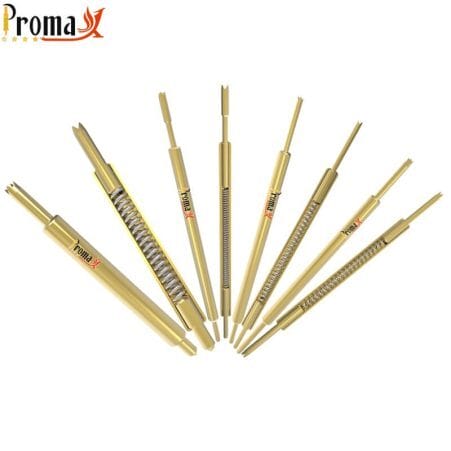
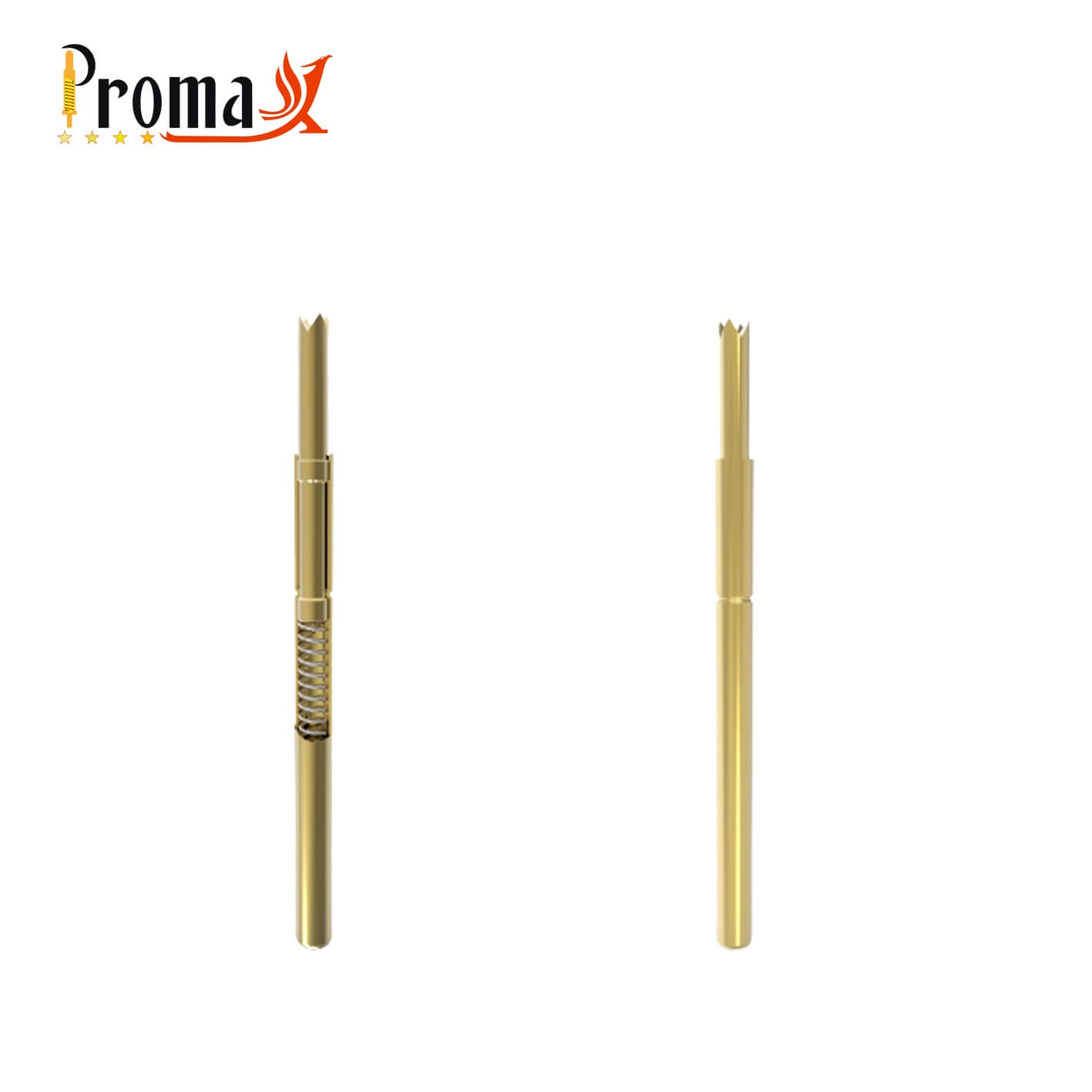
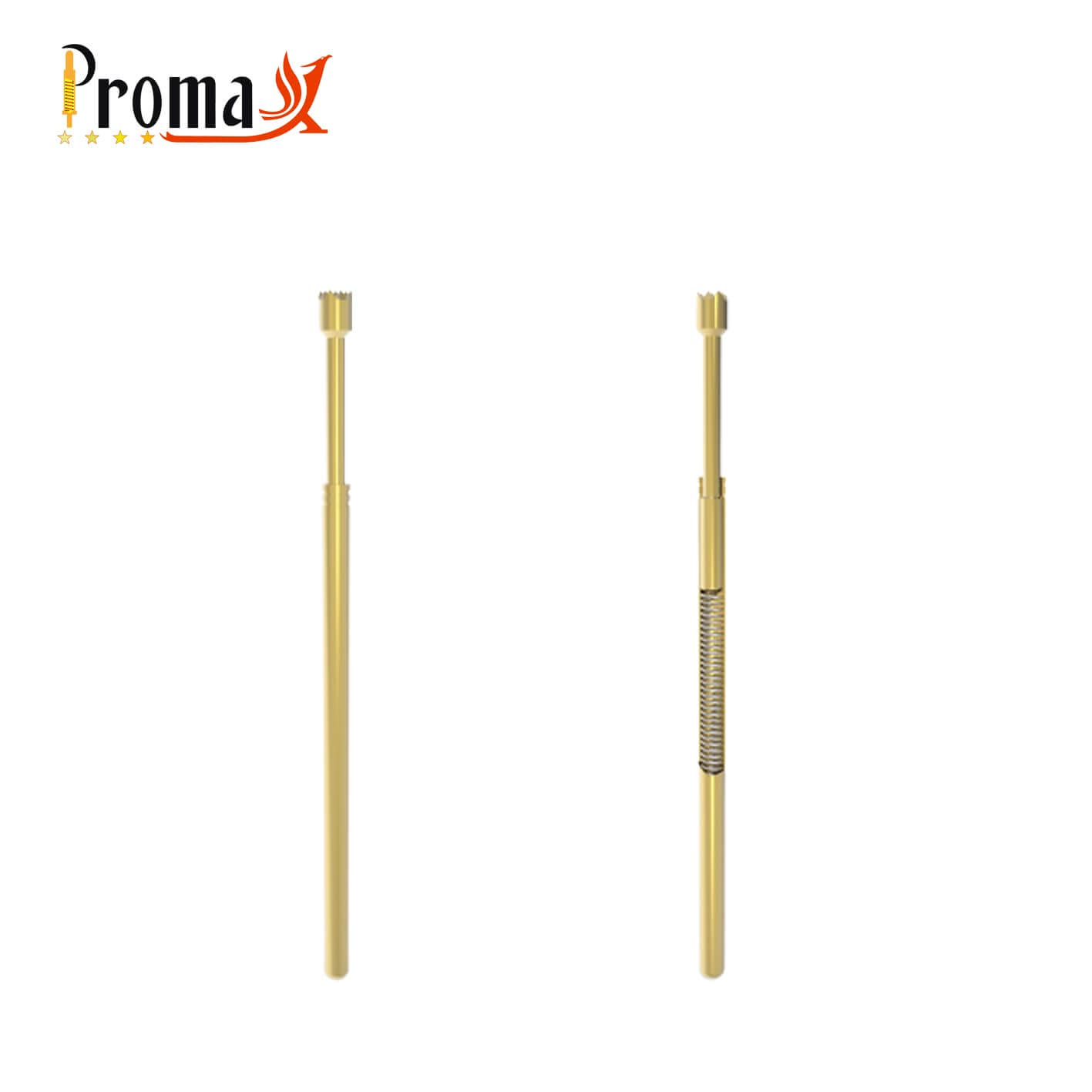
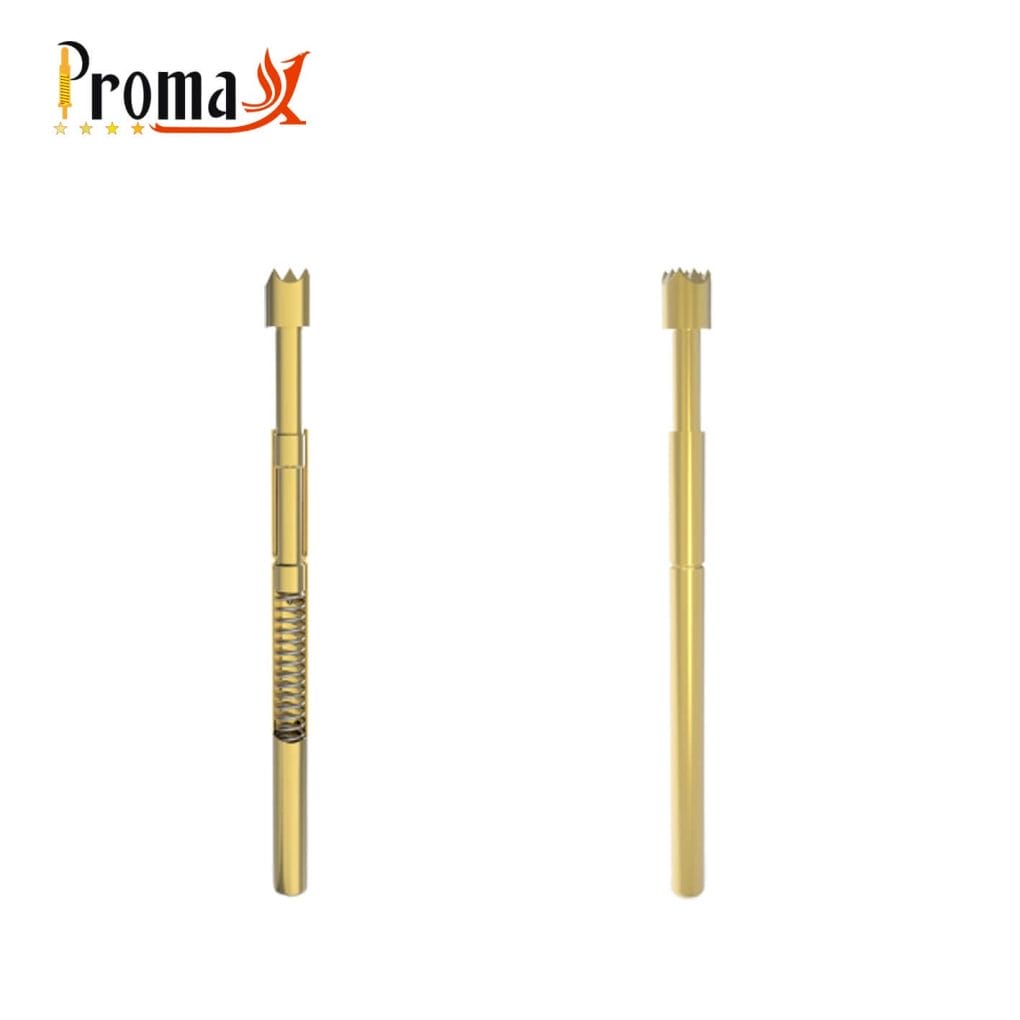
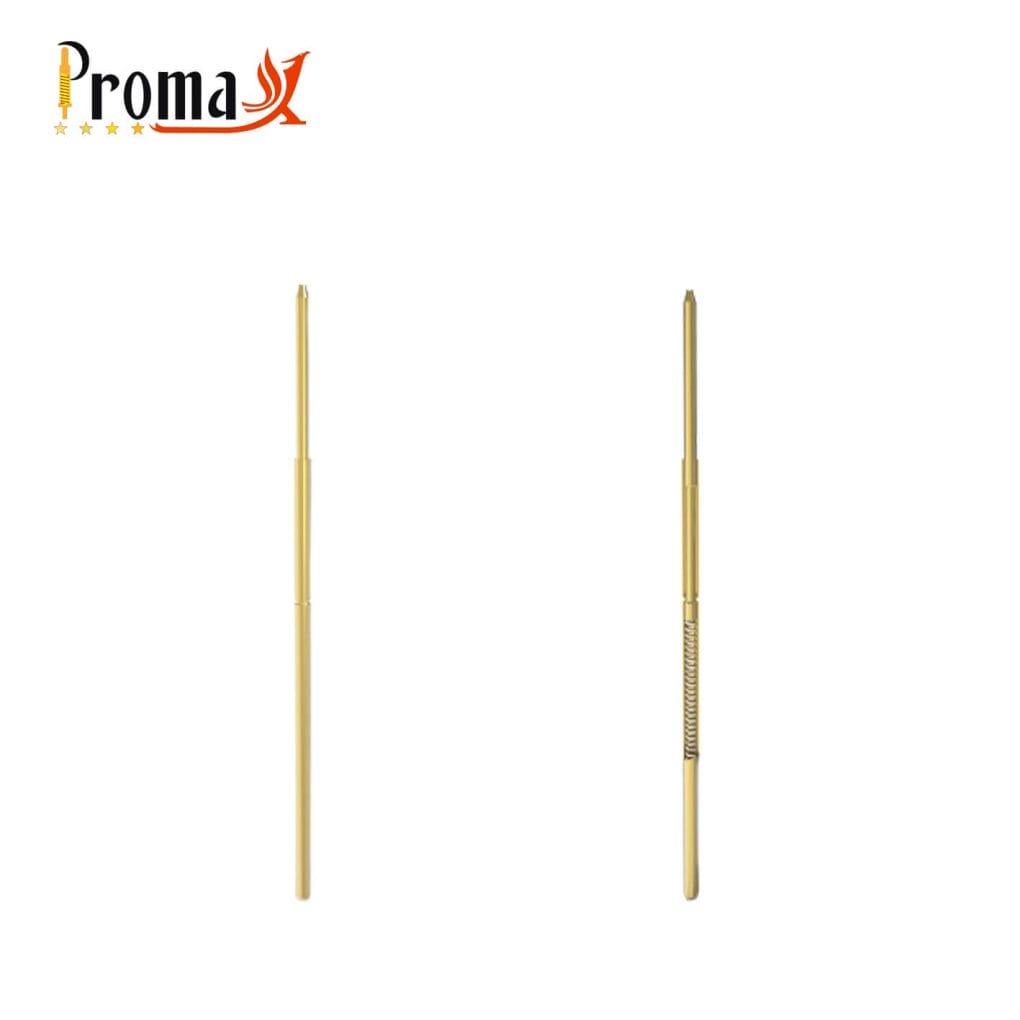
Test probes, also known as spring contact probes, are specialized connectors designed to provide reliable electrical connections in various applications, particularly in harsh environments. At Promax Pogo Pin manufacturer, we offer high-performance test probes, designed to meet the needs of industries such as telecommunications, automotive, medical, and electronics. Our test probes are expertly crafted to provide consistent, reliable connections, even in the most challenging conditions.
Promax Pogo Pin offers test probes for stable and repeatable electrical testing. Our range includes single-end probes, double-end probes, fine pitch probes, crown head probes, and custom test probes.
Each probe is built for reliable contact and low contact resistance. We also support different sizes, tip styles, spring forces, and plating options to fit different test fixtures and product designs.


A test probe consists of a plunger, barrel, and spring — the same core structure as a spring-loaded pogo pin. The plunger is biased by the internal spring so it maintains contact with a mating surface even under shock, vibration, or minor misalignment, and its contact tip (not an inserted pin) makes non-destructive, repeatable contact for electrical testing.

| Plating | Conductivity | Wear Resistance | Corrosion Resistance | Relative Cost | Typical Application |
|---|---|---|---|---|---|
| Gold | Excellent | High | Excellent | High | Precision and low-resistance contacts |
| Nickel | Good | High | High | Medium | Underlayer and protective coating |
| Rhodium | Excellent | Excellent | Excellent | Very High | High-cycle test probes |
| Palladium-Nickel | Good | Excellent | High | High | Durable precision connectors |
| Silver | Excellent | Medium | Medium | Medium | High-current test probes |
| Tin | Good | Low | Medium | Low | Solderable terminals |
Pitch, travel, and force determine whether a probe fits your fixture; current and cycle life determine whether it survives production testing. All five are configurable across our single-end, double-end, fine-pitch, and crown-head lines.
Every test probe component starts on precision CNC turning equipment, machined to tight tolerances for a consistent fit between plunger, barrel, and spring.
Machined parts are ground to finish critical dimensions, refining fit and surface finish beyond what turning alone can achieve.

Components are electroplated with the specified contact materials and finishes, such as gold, nickel, silver, or tin, to meet each application’s conductivity and durability requirements.

The plunger, spring, and barrel are precisely assembled into a single test probe, ready for electrical and mechanical testing.

Every batch undergoes comprehensive electrical and mechanical testing, including 100% contact resistance checks and mechanical force verification.

Finished probes are packed in anti-static packaging designed to prevent damage during shipping and handling.

Continuous improvement → Target Cpk 1.33
Near or exceeds Six Sigma standard


From board-level ICT to burn-in and RF calibration, Promax test probes cover the full range of electrical test and measurement scenarios.
Bed-of-nails in-circuit test (ICT) jigs and functional test (FCT) rigs use ICT test probes for high-throughput, non-destructive contact with PCB test pads and BGA balls across millions of insertions.
Wafer probe cards, burn-in sockets, and IC test handlers use IC test probes and fine-pitch probes down to 0.4 mm pitch for fine-lead package testing.
RF high-frequency probes rated to 20 GHz verify signal integrity on 5G modules, antenna arrays, and RF front-end modules before they leave the line.
ECU boards, battery management systems, and ADAS modules use high-current and crown-head probes rated to 30 A and –55°C to 250°C to verify function across harsh automotive test conditions.
Avionics, radar, and ruggedised military electronics rely on probes with MIL-STD-810F-rated ingress protection and wide temperature tolerance for reliable bench and field testing.
Double-end test probes provide repeatable, low-resistance contact for validating diagnostic equipment, patient monitors, and implantable device electronics before shipment.
Need a probe for a fixture that doesn’t exist yet? Talk to our engineers for a custom probe and fixture design.
Promax Pogo Pin has emerged as a leading manufacturer by continuously innovating in new materials, electroplating technology, and advanced manufacturing processes, ensuring the production of reliable, high-performance test probes.We are dedicated to offering both standard and custom products tailored to meet the specific needs of our customers.Read More
 “We are highly satisfied with the products, which consistently exceed our expectations in functionality, design, aesthetics, and practicality.”

“The products consistently meet our high standards, combining excellent functionality, sleek design, and reliable practicality.”

“We are impressed by the exceptional quality and thoughtful design, delivering outstanding functionality and aesthetic appeal.”

“We are highly satisfied with the products, which consistently exceed our expectations in functionality, design, aesthetics, and practicality.”

“The products consistently meet our high standards, combining excellent functionality, sleek design, and reliable practicality.”

“We are impressed by the exceptional quality and thoughtful design, delivering outstanding functionality and aesthetic appeal.”
Promax Pogo Pin combines in-house tooling, IATF16949/ISO-certified manufacturing, and 15+ years of connector engineering to keep your program on schedule and on budget—from first prototype to mass production.
Factory-direct manufacturing and streamlined production cut out middleman markups, giving you consistent per-unit pricing that scales with your order volume.
Dedicated engineers reply to technical queries and quote requests within 24 hours, with free samples available to validate fit before you commit to a run.
Single-end, double-end, fine-pitch, crown-head, ICT, IC, and RF high-frequency test probes are stocked and ready to ship, so common specs don’t wait on a full production cycle.
Spring force, stroke, plating, current rating, and packaging are engineered to your exact application—mass production typically ships in 15–20 days.
Get a custom quote, spec matching, and manufacturing guidance—without slowing down your project.
Test probe tips come in several styles to suit different test points: crown/serrated for oxidized or dirty pads, flat for delicate or gold-plated surfaces, spherical for uneven or curved contacts, and concave/cup for round leads and pins. Promax stocks all common tip styles across the single-end, double-end, fine-pitch, and crown-head lines.
Start from the structure — barrel material, plunger tip style, and spring force all determine service life and reliability. Match pitch and plunger diameter to your test pad spacing, spring force to your fixture’s compression travel, and current rating to your test signal. Our engineers can help match a probe to your fixture drawing.
Barrels are typically brass or stainless steel (SUS304/SUS316L) for corrosion resistance, plungers use tellurium copper (CuTe) or copper alloys (HBi59, Cu-Sn) for conductivity and machinability, and springs use stainless or carbon steel. Contact surfaces are plated with gold, silver, palladium-nickel, or rhodium depending on cycle life and conductivity requirements.
15+ years of spring-contact-probe manufacturing, IATF16949/ISO-certified production, and in-house tooling mean fast prototyping and consistent mass production. We support single-end, double-end, fine-pitch, crown-head, ICT, IC, and RF high-frequency configurations with free samples and 15–20 day mass production lead times.