ISO 9001, ISO 14001, ISO 45001, and IECQ QC080000
 Over 15 Years of Expertise
 FREE samples provided to ensure product satisfaction
 Rapid Turnaround: Mass Production Complete in 15 - 20 Days

A bare pogo pin isn’t waterproof, and no plating or spring choice changes that. Water resistance comes from the housing and the seal built around the contact. That makes a waterproof pogo pin connector an assembly decision rather than a component choice.
IP67, IP68, and IP69K each describe a different test condition, not three steps on one scale. The right rating starts with the exposure your product sees. It also depends on a detail most datasheets leave out: whether the connector was tested mated, unmated, or both. Get those two things right, and the rating you specify holds up in service rather than only on paper.

Are Pogo Pins Waterproof by Default?
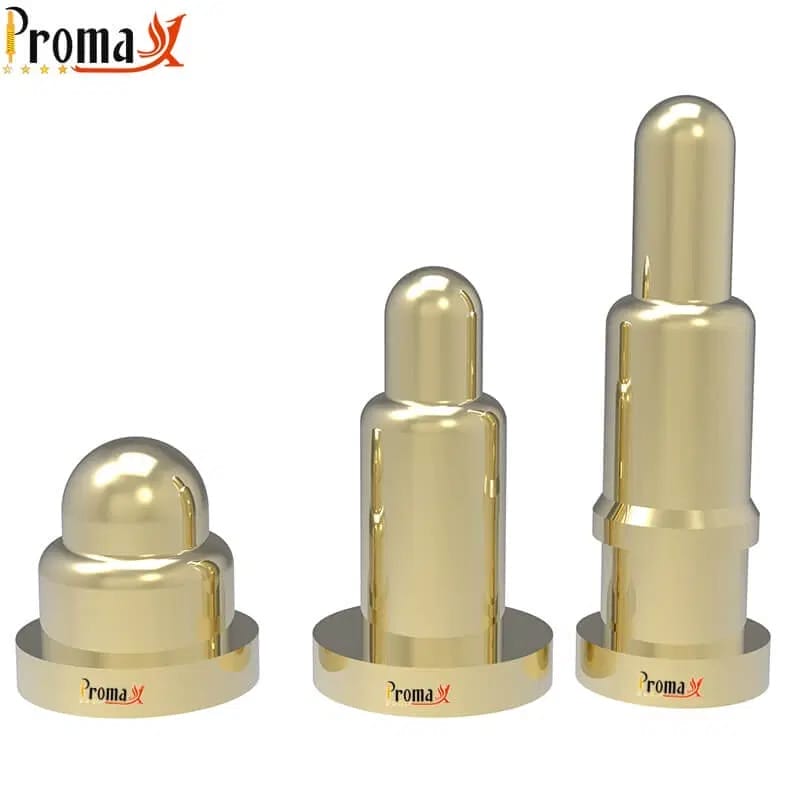
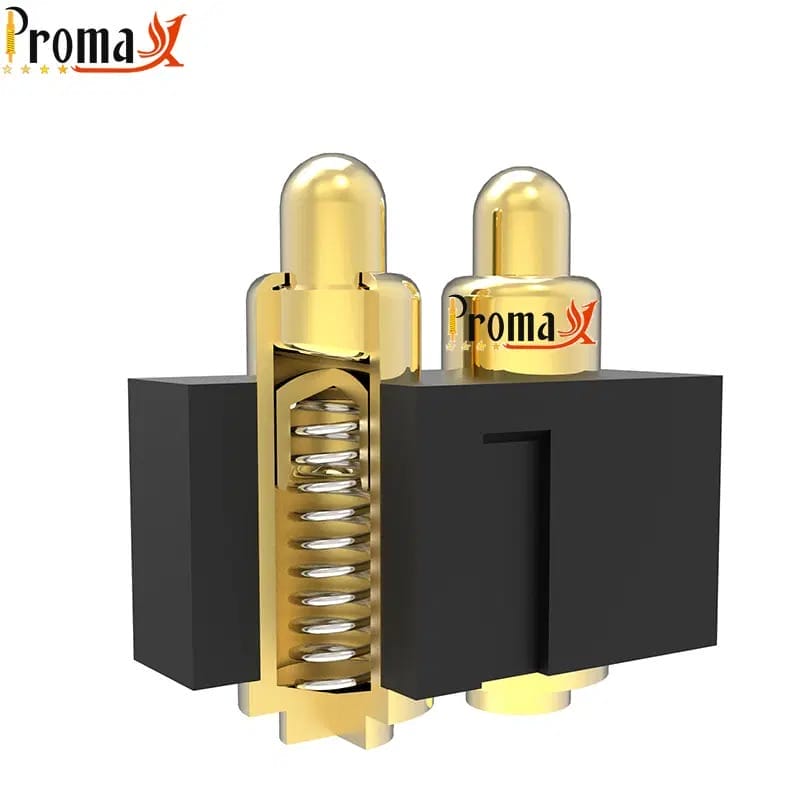
A bare pogo pin is not waterproof by default. A spring-loaded contact has a plunger that travels inside a barrel, and the clearance that lets it move also lets liquid in. Waterproofing is designed in at the housing, not inherited from the pin. Any waterproof pogo pin you see on a datasheet is a standard contact sitting inside a sealed housing.
That’s why sealing decisions start with the housing. If you’re comparing housing styles first, our sealed and waterproof connector options show how the seal is packaged around the contact.
Where water actually gets in
Liquid takes one of two routes into a spring-loaded connector. The first is the narrow gap between the plunger and the barrel, which has to stay clear for the pin to travel. The second is the clearance between the pin body and the housing around it.
The housing route is usually easier to close because it’s a static joint. Blocking the plunger path means putting a seal on the moving part, which adds friction the spring has to work against.
Why sealed connectors are in higher demand now
Sealed contacts used to be a special request. On wearables, outdoor sensors, and washdown equipment, they’re now a standard line item. Those products are sold on the promise that a rinse or a rainstorm won’t kill them, and a failed charging contact is one of the first places that promise breaks.
Many of those devices charge through exposed contacts that meet sweat every day. That’s why sealing is increasingly the baseline request rather than an upgrade.
What Do IP67, IP68, and IP69K Actually Protect Against?
Ingress Protection (IP) ratings describe what an enclosure survived under a defined laboratory test, most often one set by the International Electrotechnical Commission (IEC).
The table below compares IP67, IP68, and IP69K on solids protection, liquid testing, typical applications, and what to confirm with your supplier.
Table 1. IP rating comparison for sealed pogo pin and magnetic connectors.
| Rating | Solids protection | What the liquid test covers | Typical application | What to confirm with the supplier |
|---|---|---|---|---|
| IP67 | Dust-tight | Temporary immersion under a defined IEC 60529 condition | IP67 pogo pin charging ports on wearables, handhelds, and outdoor sensors | That the part was tested in the state your product uses |
| IP68 | Dust-tight | Deeper or longer immersion, with depth and duration declared by the manufacturer | IP68 pogo pin contacts in marine, buried, and continuously wet installations | The declared depth and duration, in writing |
| IP69K / IPX9K | Dust-tight | High-pressure, high-temperature jets, defined in ISO 20653 | Waterproof pogo pin connectors on food processing, medical washdown, and vehicle cleaning equipment | Which standard did the supplier test against |
The three ratings are separate test conditions, not rungs on a ladder. A part that passed the high-pressure jet test hasn’t automatically passed an immersion test, and the reverse is also true. That’s why some connectors carry a dual marking such as IP67/IP69K.
Match the rating to the exposure your product faces, and ask for a dual marking if it meets both submersion and washdown.
Reading the two digits
The first digit covers solids, and the second covers liquids. A six in the first position means dust-tight, which matters more on a connector than buyers usually expect. Fine dust on a sealing face can hold a seal open the same way grit does.
The second digit is where the immersion and jet conditions live. It decides how hard the housing has to work and how much of the design budget sealing will take. Moving from splash resistance to full immersion usually costs a footprint somewhere.
IP67 and IP68 in practice
An IP67 pogo pin connector is tested against a fixed immersion condition in IEC 60529: up to 1 m of water for 30 minutes. Two parts carrying that rating have been through comparable tests, so they’re reasonable to compare on paper.
IP68 works differently. The standard leaves IP68 depth and duration to the manufacturer, as long as the condition is more severe than IP67. An IP68 pogo pin claim is only as good as the numbers published beside it, and those numbers vary widely. A part tested at 1.5 m tells you little about a product that sits at 10 m. Ask for the declared condition in writing.
IP69K, and why the label is slightly wrong
The high-pressure, high-temperature jet test commonly called IP69K is formally IPX9K. It sits in ISO 20653, the International Organization for Standardization (ISO) standard for road vehicles, rather than in IEC 60529. The test sprays 80°C water at 80–100 bar from 10–15 cm. The common term is fine in conversation and in a search box.
The distinction earns its keep during supplier review. When a datasheet cites one standard and the test report cites another, you want to know which document the sample met.
How Waterproof Pogo Pin Connectors are Sealed
Sealing a spring-loaded connector is a packaging problem before it’s a materials problem. Three approaches cover most sealed designs, and each buys protection at a different cost to the design.
The table below compares O-ring sealing, overmolding, and housing geometry on where each sits, what it suits, and what it costs you.
Table 2. Sealing approaches compared.
| Sealing approach | Where it sits | Suits | Trade-off |
|---|---|---|---|
| O-ring or gasket | Between plunger and barrel, or around the housing face | Serviceable products, repeated mating, moderate exposure | Performance depends on the seal staying resilient over service life |
| Overmolding or potting | Rear of the connector and cable entry | Sealed assemblies that are never opened | Permanent. Rework means replacing the assembly. |
| Housing geometry and plating | The whole mating interface | Programs where footprint and exposure are both tight | Needs design involvement early, not at the sourcing stage |
O-ring and gasket sealing
An O-ring sits between the plunger and the barrel or around the housing face. It compresses when the connector mates, and that compression does most of the work of keeping water out. It’s usually the lowest-cost route to a usable rating and the easiest to service.
Its weakness is time. The seal works only while it still springs back, and that property fades under heat, cleaning chemicals, and repeated compression. Products wiped down daily lose it faster than products that sit in a drawer.
Overmolding and potting
Overmolding or potting seals the rear of the connector and the cable entry. That stops liquid tracking along a solder joint and into the device, which is a quieter failure than a flooded contact face. It’s permanent by design, and that’s the trade you accept.
Once an assembly is potted, rework means replacing it rather than repairing it. The approach suits products that are closed once and never opened again, such as sealed sensors and disposable medical housings. For anything a technician services in the field, gasket sealing usually wins.
Housing geometry and plunger finish
None of this belongs to the pin on its own. A rating is earned by a housing, a seal, a plunger finish, and a process that reproduces all three on every unit. Move a proven sealing design onto a different housing, and the rating doesn’t travel with it.
At Promax Pogo Pin, we treat a sealed build as one system. The housing, seal geometry, and plating get drawn together rather than added around a finished pin. Which rating a given build can hold still depends on the part design, the materials chosen, and the process capability behind them.
How Do Waterproof Magnetic Connectors Hold a Rating?

Magnetic connectors seal on a different principle. Nothing latches the two halves together, so seal compression depends on the magnet’s holding force and on how squarely the faces meet. If the magnet is too weak or the faces meet at an angle, the seal isn’t pressed evenly. Water then gets past it, however good the seal material is.
The mating face as a sealing surface
Self-alignment does more than make a connector easy to find in the dark. A face that seats the same way on every cycle compresses the seal the same way on every cycle. That consistency is what an IP67 magnetic connector depends on, and it’s why magnetic variants are common in wet wearables and outdoor charging.
Holding force is a design variable here, not a fixed property. A magnet sized for easy one-handed release may not press the seal hard enough for continuous immersion. That’s often where an IP68 magnetic connector claim falls short, so raise it before the industrial design locks.
Mated, unmated, and which state your product lives in
Most charging interfaces spend their lives unmated. The connector sits on a wrist or a dashboard with its face exposed, and the cable arrives for an hour a day. If the rating was measured mated, the exposed state is the one nobody tested.
Flush target contacts on the exposed half are easier to seal into the housing and easier to wipe clean than recessed ones. For a port that lives unmated, that choice deserves as much attention as the seal on the cable side.
At Promax Pogo Pin, we build magnetic connectors in 1–22 pin configurations, including USB-C. The sealing approach shifts as pin count and footprint change, so we decide the two together. A wide face gives the seal room to work. On a compact one, the seal geometry, pin layout, and wall thickness depend on the size and materials available.
Need pogo pins fast? Talk to an engineer
Get a custom quote, spec matching, and manufacturing guidance—without slowing down your project.
- ISO 9001 / 14001 / 45001 + IECQ QC080000
- 15+ years of expertise
- Free samples
- Mass production in 15–20 days
Does an IP Rating Survive Repeated Mating?
An ingress test is a snapshot. It happens once, on a clean sample, usually before the connector has seen a single field cycle.
Test methods such as IEC 60512 define the conditions a connector is measured under, and those conditions describe a laboratory, not a product in use.
Three things gradually move a part away from the state it was certified in.
The seal stops springing back
Elastomers take a set. Hold one compressed long enough, at temperature, and it stops returning to its original height once the load comes off. The gap it was closing slowly reopens.
Nothing about that shows on an inspection bench. The part looks right, measures right, and still lets moisture through after a season in the field. Compression set is why a sealed connector can pass incoming inspection and still fail in a customer’s hands.
Plating wears where the contact rubs
Every mating cycle rubs the plunger crown against its target pad. Plating wears fastest exactly where that contact happens, and the worn spot is rarely the part anyone inspects. Once the Gold layer wears through, the base material meets whatever moisture got past the seal.
Corrosion then starts where nobody can see it. ASTM B488 classifies electrodeposited Gold coatings for engineering use, which gives you and your supplier a common language for the discussion. The right class depends on the cycle count and the environment the part will live in.
Debris collects on the seal land
The seal itself is often not the first thing to fail. More often, grit, dried detergent, or skin oil on the sealing face costs a connector its rating. A thin film of contaminant is enough to hold the two surfaces apart.
Wiping a connector face before mating sounds too simple to matter. On washdown equipment, it’s often the difference between a seal that works and one that doesn’t. Maintenance instructions are part of the sealing design, even though they never appear on the drawing.
What to Check Before You Specify a Waterproof Connector
Start from what the product will meet, then work back to a rating. The table below runs exposure first and rating second, with the question worth asking at each level. Reading it the other way around is how projects end up over-specified and over budget.
Table 3. Environment-first selection. Exposure leads, and the rating follows.
| What the product actually sees | Sensible starting point | Question to ask before you commit |
|---|---|---|
| Rain, sweat, occasional splash | IP67 | Was the rating verified mated, unmated, or both? |
| Brief accidental submersion | IP67, with the test condition confirmed | How many mating cycles had the sample seen when it was tested? |
| Continuous or deep immersion | IP68 with a declared depth and duration | What depth and duration does the declaration state? |
| High-pressure or heated washdown | IP69K / IPX9K | Which standard was used, and is there a third-party report? |
| Chemical cleaning or disinfectant wipe-down | Rating alone is not enough | What seal material and plating were specified for that chemistry? |
Describe the exposure, not the rating
Splash, submersion, and washdown are three different problems. One rating rarely covers more than one of them well, and the paperwork doesn’t always make that obvious. State what the product meets, how often, and for how long.
A sensor rinsed by rain twice a week and a sensor sitting in a flooded field need different housings. Both get called weatherproof in a specification, which is how the wrong part reaches a purchase order. Write the exposure down before anyone writes a rating down.
Ask which state the rating covers
Mated, unmated, or both. That single question resolves more specification mismatches than anything else on a sourcing checklist, and it costs nothing to ask. A supplier who answers straight away has run the test.
Some suppliers test only the mated pair because it’s the easier condition to seal. If your product spends most of its life open to the weather, that report describes a condition it rarely meets.
What belongs in the RFQ
Your request for quote (RFQ) should ask for the declared test condition and the test report in writing. Ask how many mating cycles the sample had seen when it was tested, because a fresh sample flatters any seal. Also ask what changes if the footprint shrinks, since seal geometry is usually the first thing sacrificed in a smaller housing.
If you want to see how seal design shifts across form factors, our waterproof pogo pin connector range shows several side by side.
Which Rating Does Your Product Need?
The rating follows the environment, not the other way around. Work out what the product meets and how often. Then ask which state the number was measured in and how many cycles the sample had seen. Specify it that way, and the connector should still seal after years in the field, not just on test day.
At Promax Pogo Pin, we design and manufacture custom sealed pogo pin and magnetic connectors in our own factory. Sealing is easiest to get right while the housing is still changing, so send us the environment, the footprint, and the mating cycle count you expect. Our engineers will get back to you quickly with a sealing approach and free samples to test against your own conditions.
FAQs on Are Pogo Pins Waterproof?
Do waterproof pogo pin connectors cost more than standard ones, and where does the extra cost sit?
A waterproof pogo pin connector costs more than an open one, and most of the difference sits in tooling and assembly. Seals, overmolding steps, and tighter housing tolerances add process time. Inspection load rises too, because a sealing face has to be checked alongside the contact. Volume narrows the gap, since tooling cost spreads across the run.
Can an existing pogo pin design be upgraded to a sealed version later?
An existing pogo pin design can often be upgraded to a sealed version, though it usually means changing the housing rather than the pin. The common sticking point is a layout that left no room for a sealing land. The fix tends to be a small increase in footprint. Raising the question during layout costs little, while raising it after tooling is expensive.
Does sealing change the current or voltage a connector can carry?
Sealing doesn’t change the contact itself, so the electrical rating usually stays where the pin design put it. Heat is what changes. A sealed housing traps warmth that an open one sheds, so a connector running near its limit may need a larger pin or a derated specification.
Who issues an IP rating, and should I ask for a third-party test report?
No central body issues IP ratings. The manufacturer declares one after testing to IEC 60529 or ISO 20653, either in-house or through an accredited laboratory. Ask for the test report either way. Third-party documentation matters most in medical, automotive, and food-contact work, where your compliance file has to satisfy an auditor.
How does lead time differ between a sealed custom connector and a standard part?
A sealed custom connector takes longer than a catalog part, mostly because seal tooling and sample validation sit between design sign-off and production. Validation is usually the variable step, since ingress testing has to finish before tooling gets committed. Building that test window into the schedule early keeps sealing off the critical path.
Back to Top: Are Pogo Pins Waterproof? IP67/IP68/IP69K Guide
Need pogo pins fast? Talk to an engineer
Get a custom quote, spec matching, and manufacturing guidance—without slowing down your project.
- ISO 9001 / 14001 / 45001 + IECQ QC080000
- 15+ years of expertise
- Free samples
- Mass production in 15–20 days