ISO 9001, ISO 14001, ISO 45001, and IECQ QC080000
 Manufacturing Since 2014
 FREE samples provided to ensure product satisfaction
 Rapid Turnaround: Mass Production Complete in 15 - 20 Days


Last updated: October 12, 2026. Rates checked against official sources on that date.
China pogo pin tariffs in the US currently add about 37.5% of the customs value for pins classified as printed circuit board connectors or electrical couplings. That figure is a 25% Section 301 list duty plus a 12.5% Section 301 forced-labor duty, on a base rate that’s usually free. In the EU, pogo pins fall outside the Carbon Border Adjustment Mechanism (CBAM) today, so no carbon cost reaches your bill of materials (BOM) yet.
US rates moved twice in 2026. Plenty of landed-cost sheets still carry duties that customs stopped collecting months ago. Others miss the one added in July. If you’re sourcing pogo pins from China, check which duties your current quote includes. An outdated duty line throws off your landed cost and every BOM figure built on it.
China Pogo Pin Tariffs at a Glance: What Do You Pay in 2026?
A China-made pogo pin entering the US pays duty in layers. Two Section 301 duties sit on top of the normal base rate. The Harmonized Tariff Schedule (HTS) line your part enters under decides the total. This is general information, not customs or legal advice. Confirm your classification and rates with a licensed customs broker.
In the table, “Yes” means the layer reaches most pogo pins without special conditions. “Depends on HTS line” means the rate changes with how customs classifies your part. “Check with broker” flags a program that only covers some metal products.
The table below lists each layer as of October 12, 2026, and whether it reaches a typical pogo pin.
| Duty layer | Rate as of October 12, 2026 | Applies to pogo pins? | Source |
|---|---|---|---|
| Base rate for the HTS line | Free or 2.7%, by HTS line | Depends on the HTS line | USITC Harmonized Tariff Schedule |
| Section 301 lists duty | 25% | Yes | CBP ruling N329158 |
| Section 301 forced-labor duty | 12.5% | Yes, unless Section 232 applies | USTR notice, Federal Register, July 28, 2026 |
| Section 232 metals duties | Varies by product list | Check with broker | Section 232 proclamations on copper, steel, and aluminum |
| IEEPA duties | Ended in 2026 | No | Executive Order 14389 |
| Section 122 surcharge | Ended in 2026 | No | Proclamation 11012 |
| EU CBAM | Not in scope today | No | EU Taxation and Customs Union |
The IEEPA duties and the Section 122 surcharge are listed so you can spot them in older quotes. Neither is collected anymore, so if your landed-cost sheet still includes them, it overstates your cost. The landed-cost section further down puts the current duties into dollars for each HTS line.
Why Do Pogo Pin Buyers Need a 2026 Tariff Refresher?
If your landed-cost sheet was built in 2025 or early 2026, it probably includes duties that no longer apply. It may also miss the duty that arrived in July. These two mistakes can offset each other. A sheet that still adds the old surcharge but leaves out the July duty can land close to the right total by accident. The number looks fine, but the duties behind it are wrong, and it won’t hold up when rates change again.
Two changes did most of the moving, and both are easy to check against an old quote.
What the February ruling ended
In February, the Supreme Court held that the International Emergency Economic Powers Act (IEEPA) doesn’t authorize tariffs. Customs stopped collecting IEEPA duties on goods entered from February 24, 2026. The executive order ending IEEPA duties sets this out.
Any quote that still adds either IEEPA duty or now overstates your cost. Older quotes often label them as the “fentanyl” tariff, linked to fentanyl trafficking, and the “reciprocal” tariff. They sat on top of Section 301, and neither is collected anymore.
Importers of record can also claim back IEEPA duties they’ve already paid. The FAQs below cover who can file and how.
What replaced the stopgap surcharge in July
A temporary 10% surcharge under Section 122 filled the gap from February 24 to July 24, 2026. The day it expired, a 12.5% forced-labor duty took its place. The US Trade Representative (USTR) set it out in its Section 301 forced-labor notice. For most pogo pins, this new duty sits on top of the list duty rather than replacing it.
If your sheet still shows the old surcharge, your real stack is now a little higher than it says. If you dropped the surcharge in July and added nothing back, your number is too low.
Section 301 Tariffs: Where Do They Stand for Pogo Pins Now?
Section 301 list duties have applied to most Chinese connectors since 2018, and they still apply today. The February ruling only covered IEEPA, so it left these duties untouched. For pogo pins, the real question isn’t whether Section 301 applies. It’s which HTS line sets your starting point.
Which pogo pin HTS code applies to your part?
The HTS code is the 10-digit number customs uses to set your rate. You can look up any line in the Harmonized Tariff Schedule. Many board-mount pogo pins and pogo pin connectors are entered as printed circuit board (PCB) connectors under 8536.69.4040. US Customs and Border Protection (CBP) has classified similar parts that way, as in this CBP ruling on PCB connectors.
Single pins sold as contacts may fall under 8536.90.4000, and some plug-style connectors under 8536.69.8000. The right line depends on how the part mounts, what it connects to, and how it ships. Only your broker or a binding ruling settles it for your exact part.
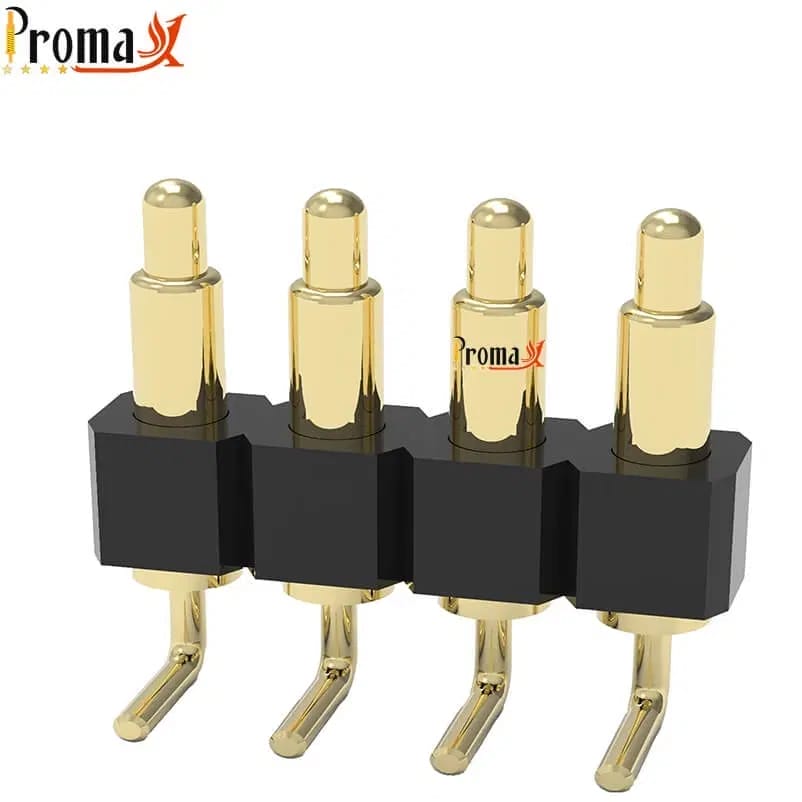
If you’re weighing board-mount formats, our range of pogo pin connectors shows the mounting styles that most often decide which HTS line applies. Have your part drawing handy when you talk to your broker. The mounting detail is what they’ll ask about first.
How the list duty and forced-labor duty stack
Both Section 301 duties are charged on the same customs value, side by side. Neither is calculated on top of the other, so there’s no compounding to worry about.
Think of two separate surcharges on one invoice, each worked out from the same subtotal. That’s why the totals in the landed-cost table below are a simple sum of the layers.
Are any exclusions available?
USTR keeps 178 product exclusions alive for now, under its exclusion extension notice. The connector items on that list are narrow, though. They cover parts such as ring terminals rather than pogo pins. It’s safer to plan as if no exclusion applies and treat any future one as a bonus.
Could Other US Tariffs Apply on Top?
Two other US programs are worth a quick check with your broker. Neither applies to pogo pins by default, but both can change the math for a particular part or product category.
Section 232 metals duties
Section 232 duties charge some copper, steel, and aluminum products on their full customs value, not just the metal inside them. Pogo pins are usually brass or another copper alloy, so it’s fair to ask whether they’re caught.
As of October 12, 2026, they aren’t. None of the three HTS lines’ pogo pins usually fall under the Section 232 lists. The products Commerce proposed adding in August 2026 didn’t include them either. For a standard pogo pin, you pay the Section 301 duties and no Section 232 duty.
Ask your broker to check before each new part or contract renewal, because these lists have changed more than once this year. If your line were ever added, the Section 232 duty would replace the forced-labor duty rather than sit on top of it.
Antidumping and countervailing duties
As of October 12, 2026, no antidumping or countervailing duty order covers pogo pins, so neither adds to your landed cost. These are extra duties the Commerce Department sets on specific products when it finds unfair pricing or subsidies.
Because each order names specific products, an order on another item doesn’t affect your pins. Check with your broker if you add a different part to the same order, such as cable assemblies, since that product could carry its own order.
Need pogo pins fast? Talk to an engineer
Get a custom quote, spec matching, and manufacturing guidance without slowing down your project.
- ISO 9001 / 14001 / 45001+ IECQ QC080000
- Manufacturing Since 2014
- Free samples
- Mass production in 15–20 days
Does CBAM Apply to Pogo Pins Imported Into the EU?
Pogo pins aren’t covered by CBAM today because their customs codes fall outside the goods CBAM lists. CBAM is the EU’s carbon charge on certain imports, and its current scope is set out on the EU CBAM page.
If you’re asking about CBAM and electronic components more widely, the same rule holds. Coverage follows the customs code, not the metals inside the part.
What CBAM covers in 2026
The definitive period started on January 1, 2026, and covers iron and steel, aluminum, cement, fertilizers, electricity, and hydrogen. Copper-alloy pogo pins aren’t on that list, so they carry no CBAM cost when they enter the EU.
There’s also an annual threshold of 50 tonnes of CBAM goods, below which importers are exempt. That matters more if you also buy steel or aluminum parts, such as brackets or housings, alongside your pins.
The proposed 2028 downstream extension
In December 2025, the European Commission proposed extending CBAM to about 180 steel- and aluminum-intensive downstream products from January 1, 2028. It’s still being negotiated. The Council and Parliament have each adopted their own position, and Parliament’s version covers far more products.
The Commission’s proposal names cables and conductors, but plugs and connectors aren’t in it. The wider positions could change before a final text is agreed upon, so treat it as an open question. If connectors were ever added, the cost would land on the EU importer, not on the factory that made the pins.
What EU buyers should monitor
Three things will tell you whether CBAM ever reaches your pogo pin costs.
- The final annex text, once the Commission, Council, and Parliament agree on it.
- Whether any Combined Nomenclature (CN) 8536 lines are added, since that’s where pogo pins and most connectors sit.
- Any steel or aluminum housings in a connector assembly, which could be classified under a different code than the pins.
How Much Do Tariffs Add to Your Pogo Pin Landed Cost?
US duty is calculated on customs value, which is usually the transaction value of the pins you bought. The table below applies the current stack to the three HTS lines pogo pins most often fall under. Only the base rate differs between them, so the gap in the totals is small.
| HTS line | Typical pogo pin fit | Base rate | Section 301 list | Forced-labor duty | Total added duty |
|---|---|---|---|---|---|
| 8536.69.4040 | Board-mount pins and connectors entered as printed circuit connectors | Free | List 1, 25% | 12.5% | 37.5% |
| 8536.90.4000 | Single pins entered as contacts or couplings | Free | List 1, 25% | 12.5% | 37.5% |
| 8536.69.8000 | Some plug-style connectors | 2.7% | List 3, 25% | 12.5% | 40.2% |
Any estimate is only as good as the classification, the invoice value, and the Incoterm working together. The Incoterm is the agreed shipping term that decides who pays which costs. If any of the three is off, the total moves with it.
A worked example
Say you import pogo pins with a customs value of $10,000, entered under 8536.69.4040. The base rate is free, the list duty adds $2,500, and the forced-labor duty adds $1,250. You’d pay $3,750 in duties before any of the costs below.
What the table leaves out
Duty is only part of landed cost, though on small, light parts like pogo pins it can be the largest add-on. You’ll also pay freight, insurance, the merchandise processing fee, the harbor maintenance fee on ocean freight, and your broker’s fees. These vary by shipment, so get current figures from your forwarder rather than relying on a generic percentage.
What EU buyers pay instead
The table above is US-only. EU buyers pay the normal EU customs duty for the CN code, plus import value-added tax (VAT), with no Section 301 equivalent on top. Check the duty rate for your exact code in the EU’s TARIC tariff database before you lock a cost.
How Do You Build Tariff Risk Into Your BOM?
Pogo pin import tariffs are better treated as a range you manage, rather than a fixed line in your BOM. Each of the five steps below takes little time, and each one protects a different part of the number.
1. Lock the HTS line with your supplier and broker
Ask your supplier which code appears on its export documents. Then have your broker confirm the full 10-digit US line before the first shipment. For a high-volume part, a CBP binding ruling gives you a written answer you can rely on.
At Promax Pogo Pin, we put the same code on every invoice for a part number, so your broker isn’t re-classifying it each time. That’s typically 8536.69 for pogo pin connectors and 8536.90 for single contact pins.
2. Decide who pays the duty: FOB or DDP
Under Free On Board (FOB) terms, you’re the importer of record, so you pay the duty when the pins arrive. Under Delivered Duty Paid (DDP), the seller handles import and duty, and prices are added to the quote.
Neither is cheaper by default. FOB usually suits buyers who already import regularly and have a customs broker and freight forwarder. You see the actual duty on every shipment, and you control freight costs.
DDP suits buyers who import rarely or want one all-in price with no customs work. The trade-off is less visibility. The seller builds duty, freight, and a buffer for rate changes into the price, so you can’t see what each part costs.
3. Price a rate band, not a single rate
Instead of one duty figure, put three in your BOM: today’s rate, a higher case, and a lower case. Base each one on a real event from the watch list in step four below, not on a guess.
For example, your higher case could assume the Section 301 review raises the list duty. Your lower case could assume connector lines make the 30-for-30 tariff cuts. When either event happens, you’ll already know what it does to your unit cost and margin.
Your Incoterm decides how fast you feel it: under FOB, a rate change hits your next shipment, while under DDP it usually shows up when the seller reprices.
4. Put watch dates on the calendar
The current Section 301 exclusions expire on November 9, 2026, and the second Section 301 four-year review opened in May 2026. On the EU side, watch for a final decision on the CBAM extension.
The new US–China “30-for-30” reduced-tariff lists are worth watching too. They’re recommendations with no rates or start date yet. Check whether any connector lines are included once the final terms are published.
5. Keep origin paperwork consistent
Section 301 follows the country of origin, not the port the goods ship from. Matching part numbers, HTS lines, and origin statements across every invoice keeps your entries clean. Our ISO 9001 quality system covers document control, which keeps part numbers and export documents consistent from one shipment to the next.
Ready to Put a Number on Your Pogo Pins?
Before you compare unit prices from different factories, ask each one for the HTS line and the Incoterm behind the quote. A DDP quote already includes duty, while an FOB quote doesn’t, so the cheaper-looking price isn’t always the cheaper part. Pogo pins cost little per unit, so duty can easily outweigh a small price gap between two offers. Compare landed cost per pin, not the headline price.
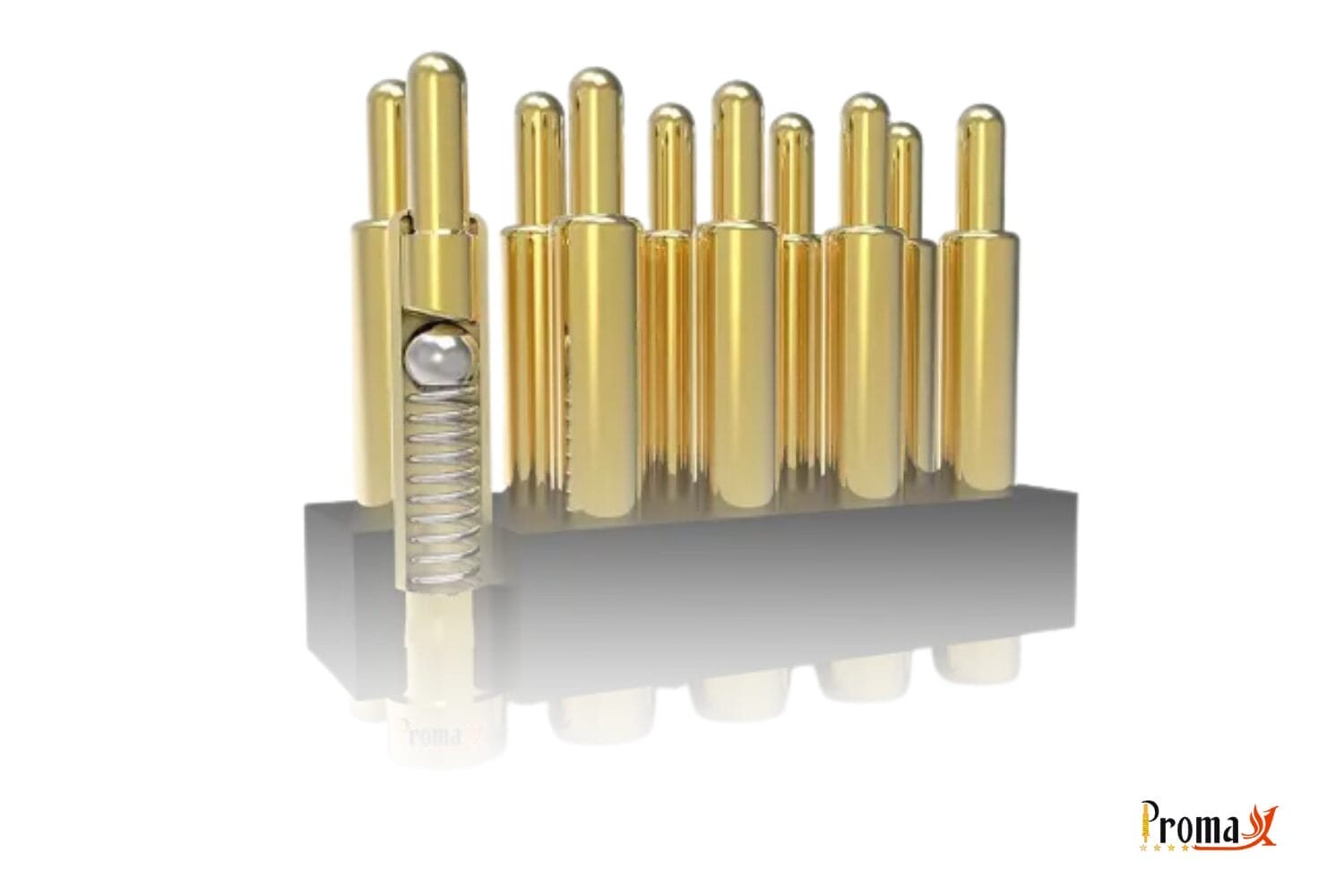
At Promax Pogo Pin, we make custom pogo pins, spring-loaded connectors, and test probes in our own Dongguan factory. Every quote can show the tariff code and the Incoterm, priced FOB or DDP, so you can compare the landed cost from day one. Our US and UK sales offices support buyers in both markets, and we accept payment in USD or Euros. Send us your drawing and target volumes, or talk to our team about shipping terms before you order.
China Pogo Pin Tariffs Guide 2026 FAQs
Does buying through a US sales office change the tariff on pogo pins?
A US sales office doesn’t change origin, so pins made in China pay Chinese duties. Promax Pogo Pin’s address in Gary, Indiana, is a sales office, not a factory. Our pins are made in our Dongguan factory, so they’re China-origin goods wherever the invoice is issued.
Do free pogo pin samples pay import duty?
Free samples entering the US need a customs entry, since duty-free de minimis treatment ended for Chinese goods in 2025. Duty is owed on the samples’ declared value, even when you didn’t pay for them. Your courier or broker usually handles the entry for you.
Can I get back IEEPA or Section 122 duties paid on earlier pogo pin orders?
Importers of record can claim back IEEPA duties through CBP’s CAPE refund portal. Only the importer of record, or the broker that filed the entries, can submit a claim. Section 122 refunds are different. A May 2026 court ruling against the surcharge is under appeal, and there’s no general refund process yet. Ask your broker about protective protests.
Does moving final assembly to another country change the Section 301 rate?
Moving final assembly changes the Section 301 rate only if the work substantially transforms the part into something new. Simple repacking, kitting, or relabeling in another country doesn’t change origin. A broker or a CBP ruling is the reliable way to confirm it for your product.
Is duty charged on freight costs too?
In the US, duty is usually based on the value of the goods, not including international freight and insurance. In the EU, customs value includes freight and insurance up to the EU border. That difference matters when you compare landed cost across the two markets.
Back to Top: China Pogo Pin Tariffs Guide (2026): Section 301, CBAM and Your BOM
Need pogo pins fast? Talk to an engineer
Get a custom quote, spec matching, and manufacturing guidance without slowing down your project.
- ISO 9001 / 14001 / 45001+ IECQ QC080000
- Manufacturing Since 2014
- Free samples
- Mass production in 15–20 days